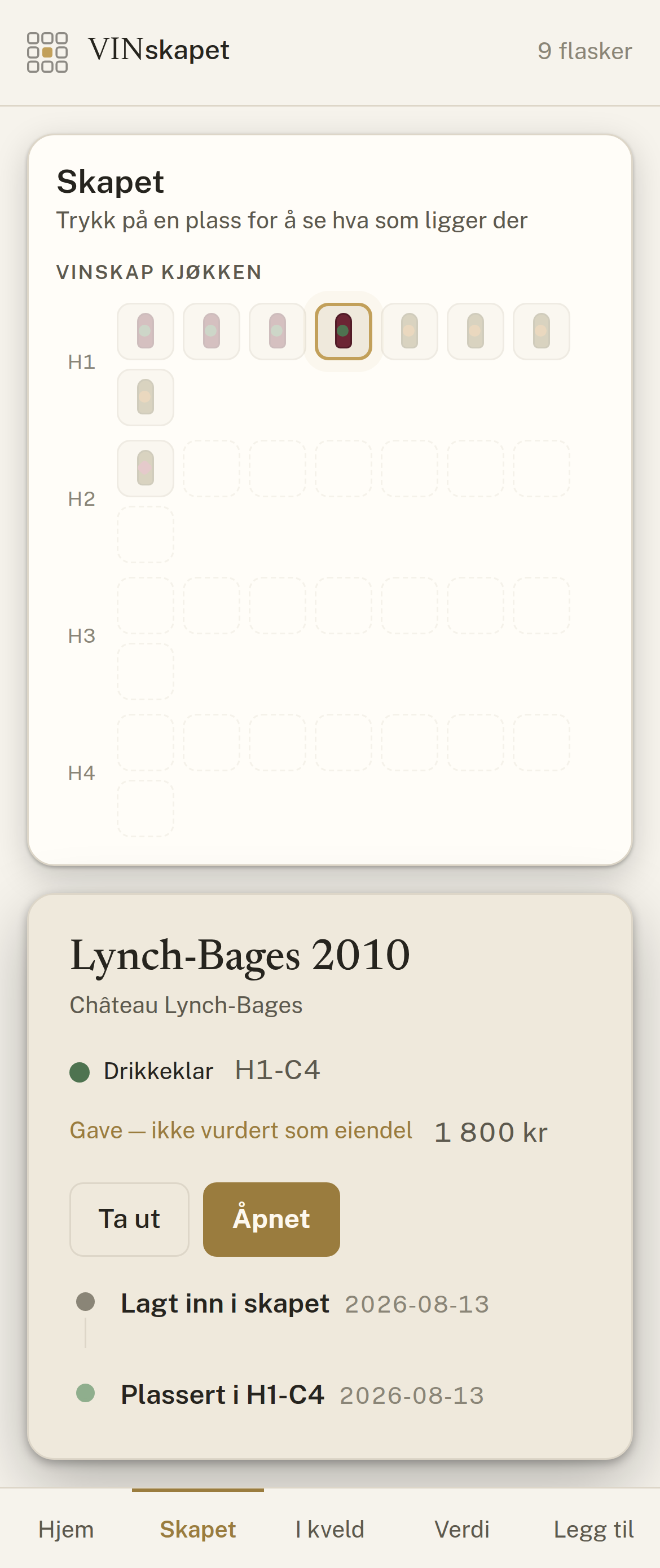
It is a quarter to seven, guests arrive in an hour, and you are standing in front of the cabinet with no idea what is in there. Somewhere at the back is the bottle your father gave you. You cannot remember which shelf, and you cannot remember whether it is still too young.
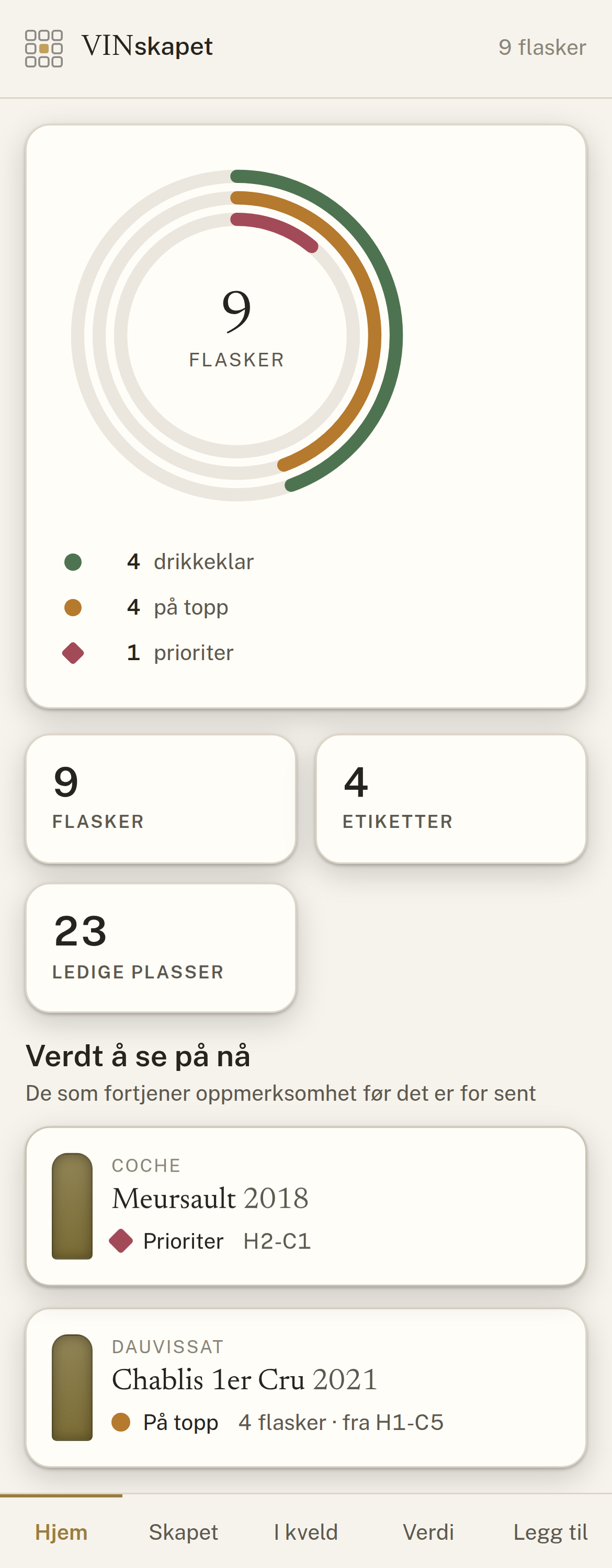
Most wine apps know what you own. CellarOS knows which bottle. Six identical bottles are not the number six: one was a gift, another you bought at auction, a third is set aside for a particular dinner — and only one of them sat in the cabinet the week the temperature ran.
So the cabinet knows where the bottle lies, who gave it to you, when it will be at its best, and what happened the night you finally opened it. This is not a spreadsheet for wine. It is the memory your collection has never had.
THE CELLAR — IN REAL NUMBERS
Six identical bottles become6 records, not 6
From label to placed bottleunder 15 seconds
Suggestions for tonight3, each with a reason
Slots that can be double-booked0
Offlineeverything works
Zero double-booked slots is a rule in the system, not a warning. And cellars are often in basements — which is why everything works offline.
🍇
The bottle, not the count
Every bottle is its own object, with its own slot, owner, cost and history. Inventory is derived from what actually happened, so it never quietly stops being true.
🕯️
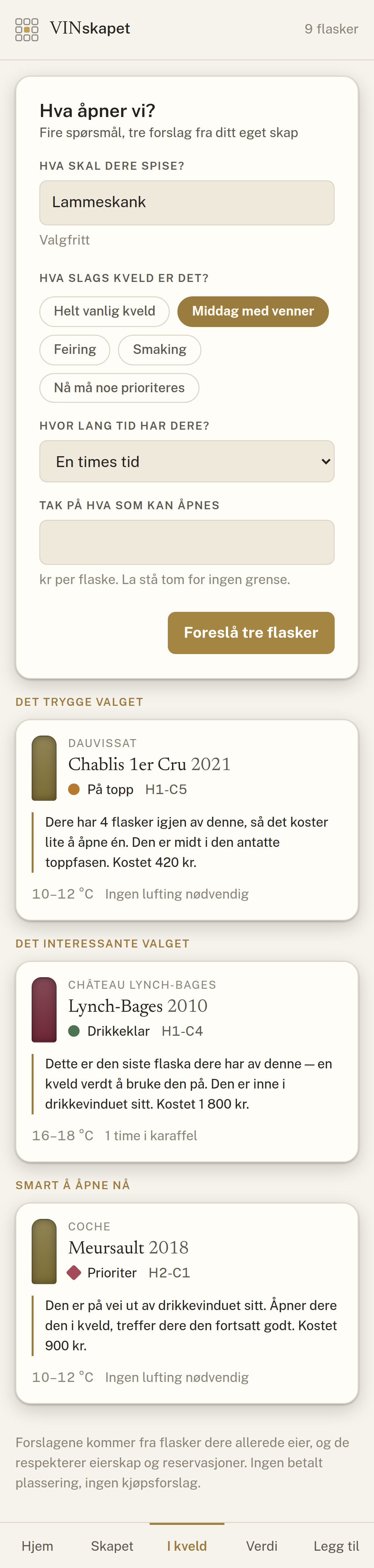
What shall we open tonight?
Say what you are eating, who is coming and how long you have. You get three suggestions from your own cellar — each explaining why, and where the bottle physically is.
📜
A passport for each bottle
Bought in April 2018. A gift from Dad on Christmas Eve. Moved to N4-R2-C5. Opened with Thomas and Anne. A bottle does not vanish when it is drunk — it moves from inventory into the collection’s history.
📈
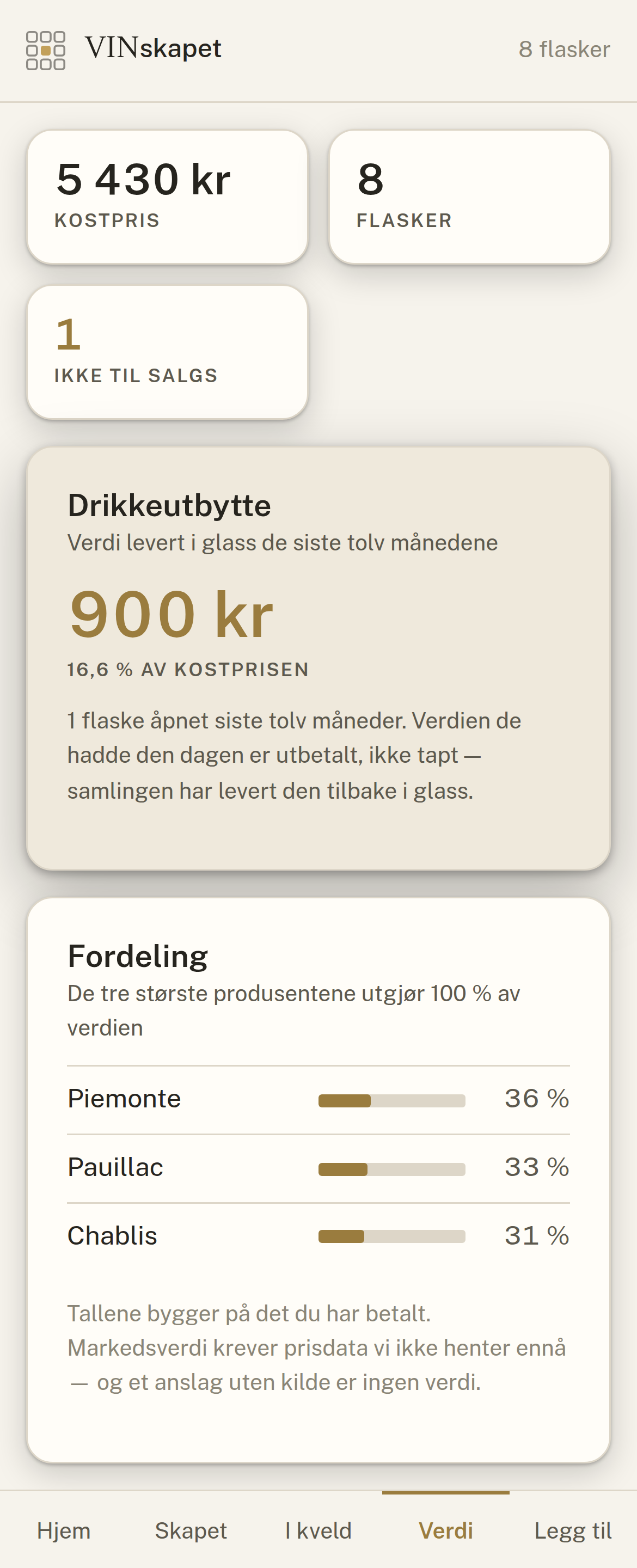
Drinking is the dividend
A cellar is capital that moves. CellarOS accounts for it exactly rather than on average — each bottle carries its own cost. A bottle you drank when it was worth NOK 2,400 has paid out NOK 2,400.
WHAT WE DO NOT DO
CellarOS does not count how much you drink. There are no points, no streaks and no comparison with anyone else. No paid recommendations, no buy buttons, no suggestions about what you ought to acquire.
We reward order, knowledge, maturity and memory. Never consumption.
And some bottles are not assets. A gift from your father has a market price, but it is irrelevant — the system knows the difference, and will never suggest that you sell it.
IN DEVELOPMENT — FOUNDERS CELLARS IS OPENING FOR THE FIRST 50 CELLARS
If you have between 30 and 300 bottles and a cabinet you are fond of, we would like to build this with you. No cost, no obligation — we need real cabinets, real mess and honest feedback.
CellarOS is an inventory, storage and knowledge tool for wine you already own. The service does not sell alcohol, does not broker sales, and contains no sponsored recommendations. Screenshots show example data.
THREE PRODUCTS. ONE IDEA.
OurFamilyHub asks:
How can a family make everyday expectations visible?
Samklang asks:
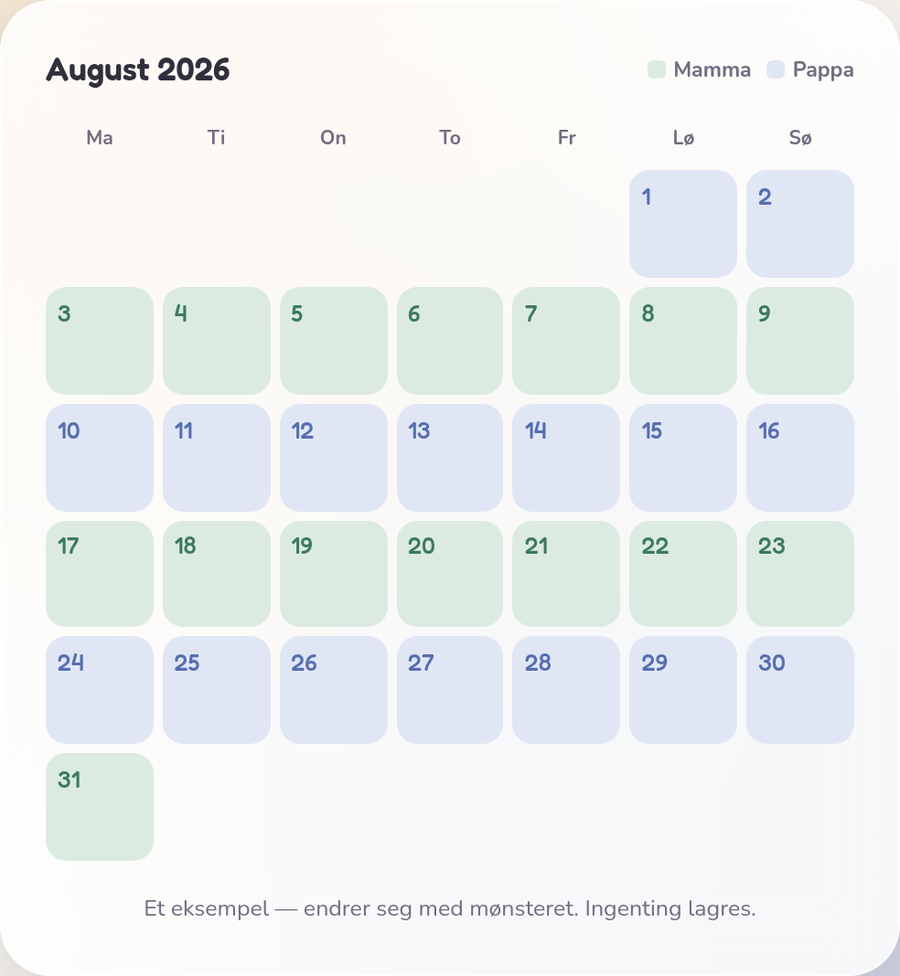
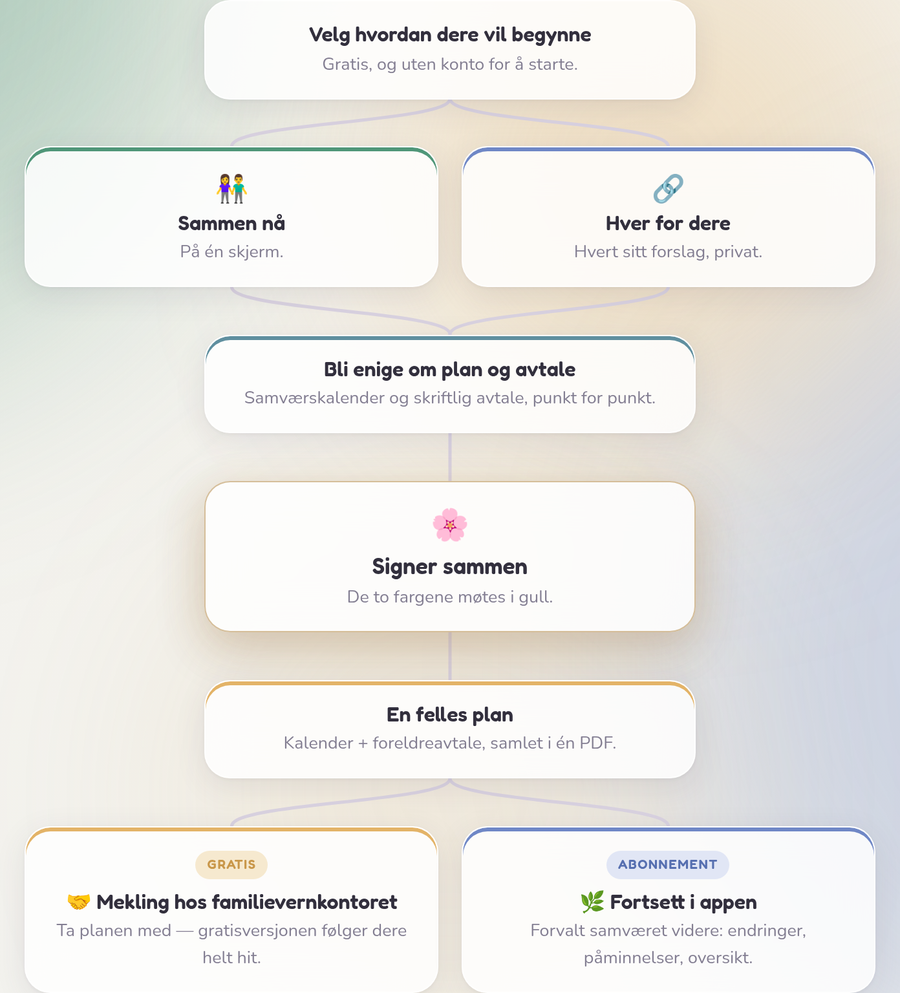
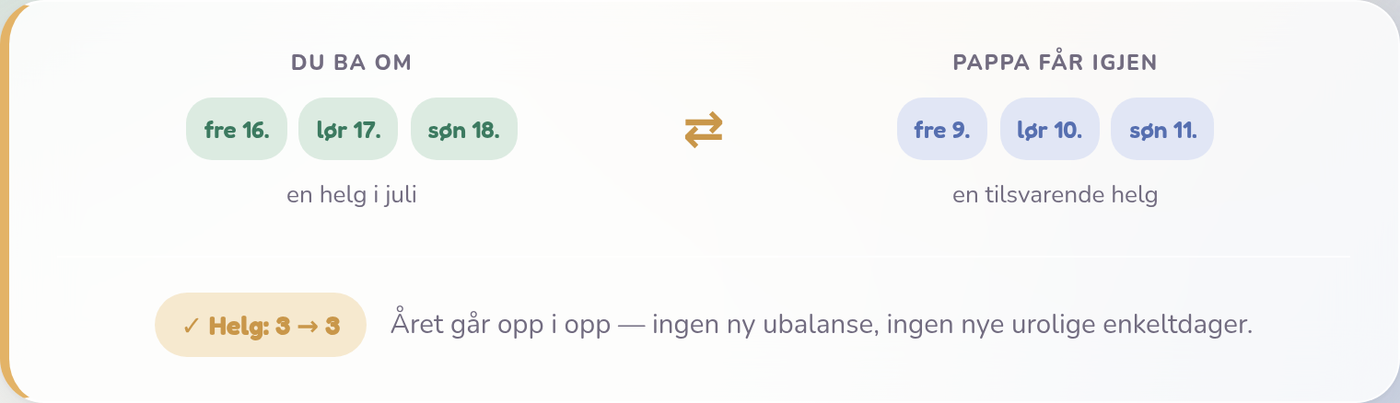
How can two parents make the consequences of a shared decision visible?
CellarOS asks:
How can a cellar make its own memory visible?
In each case the answer is not more communication or more data — families already talk constantly, and a cellar already holds everything it knows. The answer is better structure around what is already there. That is the Noema model.
THE SMALL, REPEATED THINGS
We are interested in a particular kind of problem.
Not the spectacular ones. The small ones. The ones that repeat every single morning. The tiny pieces of friction that, repeated every day, become surprisingly large.
We build software to make those things simpler.
The task someone forgot.
The child who asks what happens next.
The calendar nobody quite understands.
The conversation two people have already had three times.
The agreement that looked simple until real life happened.
The mental checklist carried around in somebody's head.
WHY NOEMA?
The company began with two names.
Nora. Emma.
Two girls. Two very different little people. The name became a small private piece of wordplay built from Emma and Nora — a name that could belong to a technology company without immediately explaining what that company was supposed to become.
Then came an unexpectedly appropriate second meaning: νόημα — Greek for thought, perception, understanding, meaning. In Husserl's phenomenology: the content of an experience — the thing as we understand it. Take something messy. See it clearly. Understand what is actually happening. Make it easier to act.
Clarity before complexity.
Understanding before automation.
People before software.
IT STARTED WITH TWO GIRLS
No whiteboard. No pitch. Just everyday life.
Emma was six. Nora was five. And mornings were mornings. Someone needed socks. Someone had decided that brushing teeth was optional. Seven straightforward steps — except that parenting is the strange science of discovering that seven straightforward steps may require thirty-seven individual reminders.
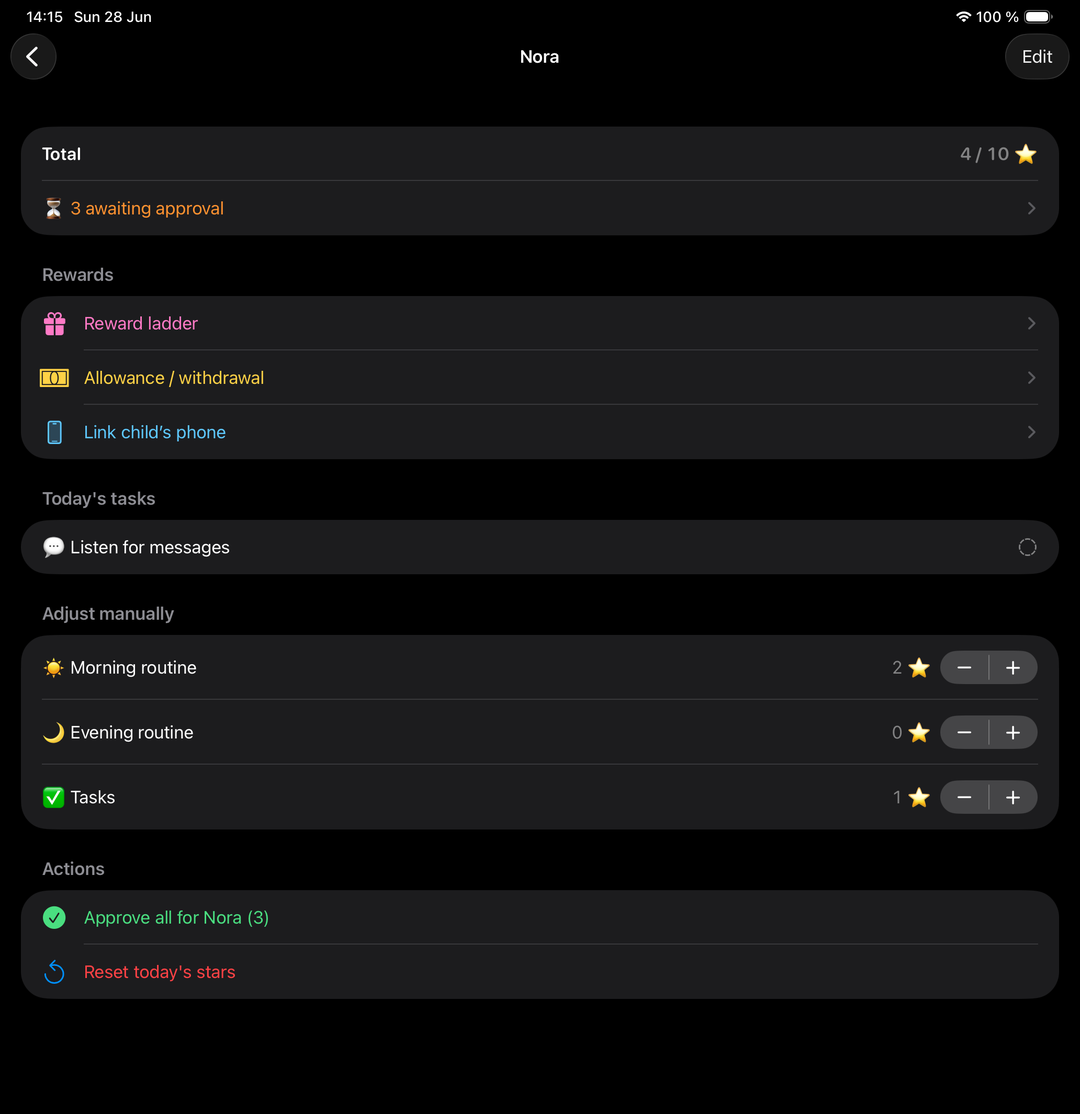
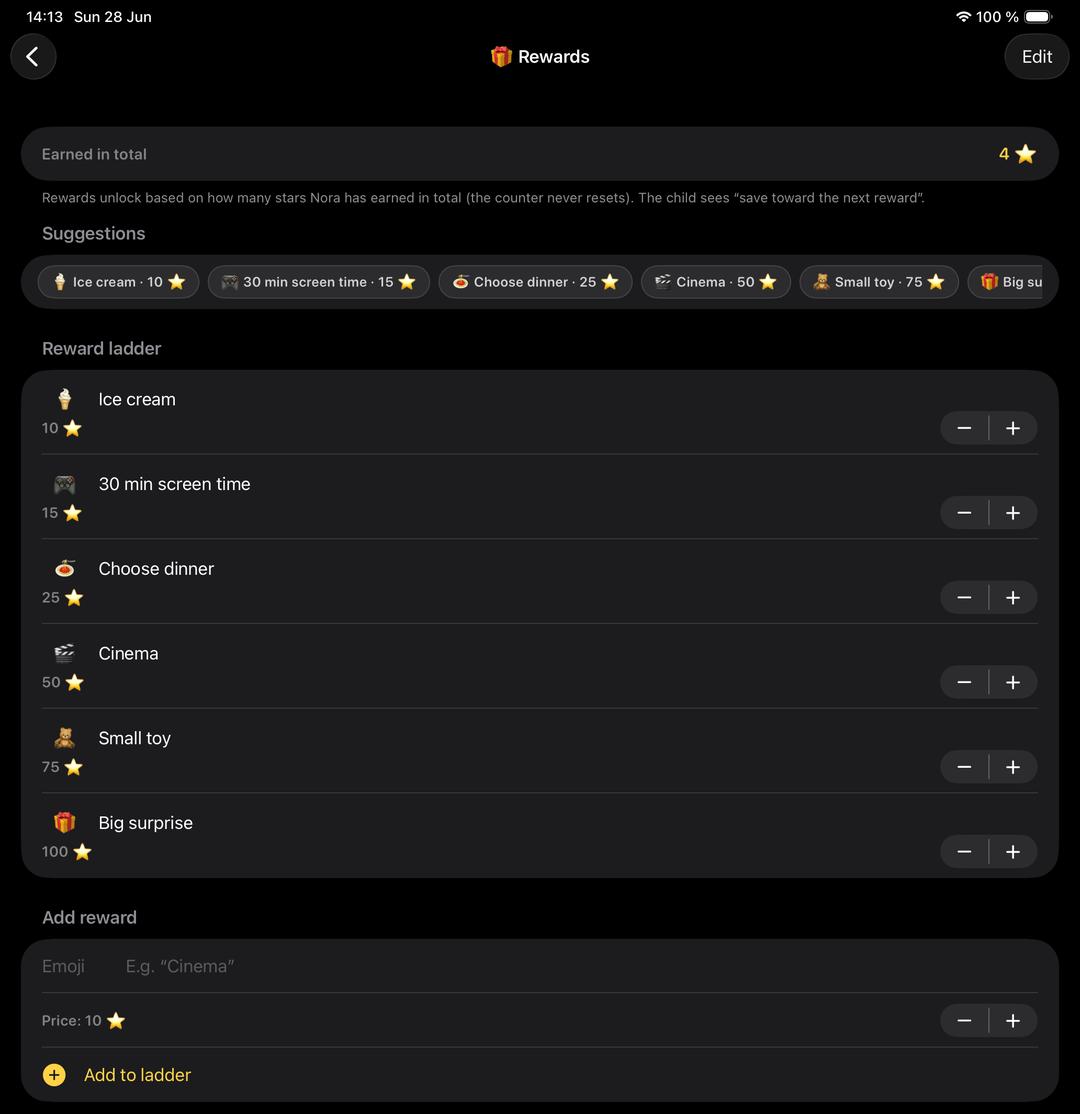
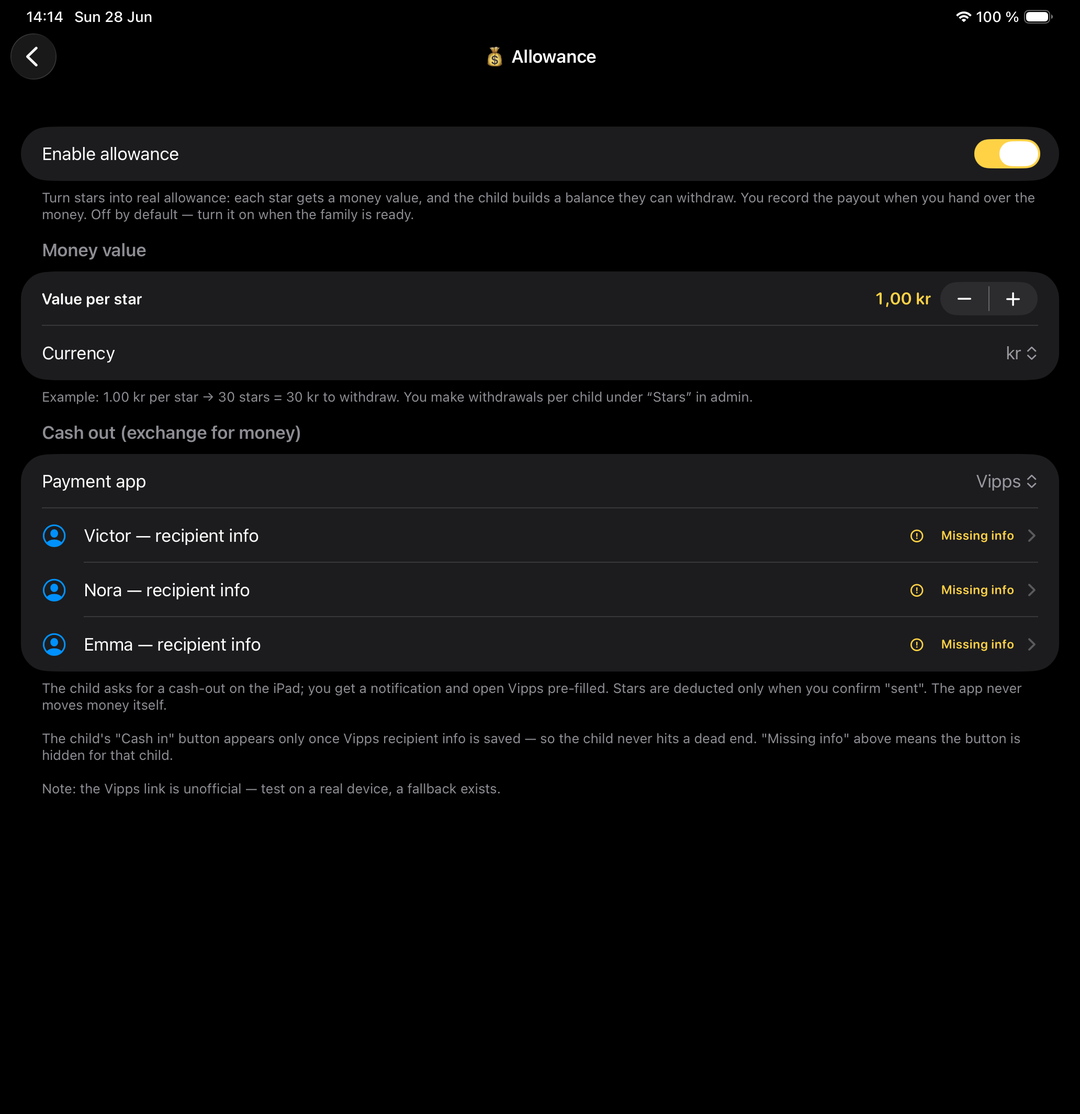
Somewhere inside that repetition was the beginning of an idea: What if the routine did not have to live inside the parent's head? What if children could see it? Own it? Complete it — and maybe even enjoy it? A piece of paper could do some of that. An old iPad on a kitchen counter could do much more.
That thought became OurFamilyHub.
BUILT IN NORWAY
Useful pressure.
Norwegians are not famous for accepting unnecessary complexity. We expect digital services to work, we expect privacy and direct language. The ambition, however, is larger than Norway — children need routines everywhere, parents negotiate time everywhere, and badly designed software is, fortunately for us, an international phenomenon.
FOUNDER-OWNED FOR A REASON
Magnus Bjurling · founder & owner
Noema Holdings is 100% founder-owned. That gives an unusual luxury: build slowly when slowly is correct, give something away when free creates the right product behaviour, and refuse to optimise a product around metrics that would make it worse for the people actually using it. A career through finance, operations and SaaS — today also CFO of Qondor. The same idea, somewhere very different: not financial reporting. Family life.